
The ties that bind...
Removing the cloaks...

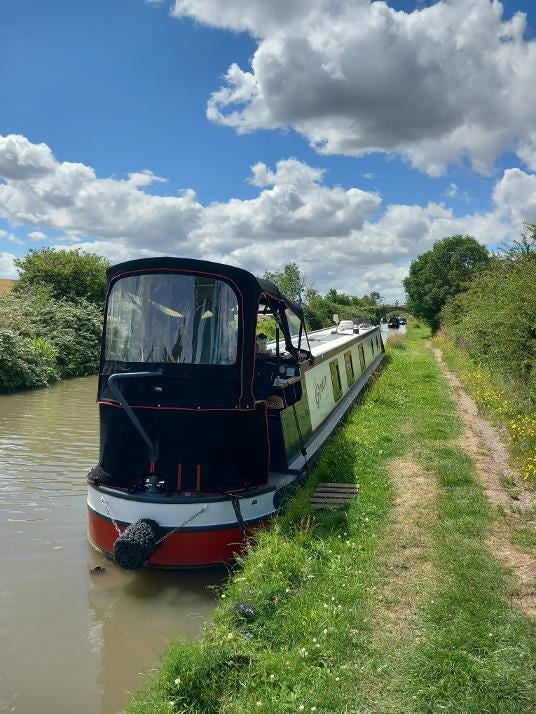
For the first three and a half years of living on our narrow boat, we cruised the UK canal system continuously, but the combination of buying a motorhome (van) and getting older and having to attend various appointments has curtailed our cruising pattern somewhat. However, last week we had a week’s window with no doctor or dentist appointments (regular Invisalign check ups for me and replacing a crown for Rob) so we headed out on the cut (the ‘cut’ is the name we give to the canals in the UK). We hadn’t taken the boat out of the marina for months as we’d been too busy travelling to the Outer Hebrides and the Lake District in the van and it was a bit of a shock to be passing lots of boats every few minutes. It’s part of narrow boat folklore that you’ll nearly always meet another boat coming through a blind bridge: you may not pass another boat for a while, but you can bet wherever there’s a bridge that you can’t see beyond, there’ll be a boat coming through the other side totally oblivious to your presence. It was great to be out and about again, waving to other boaters and we were able to meet up with friends for a BBQ one evening as our paths crossed, but travelling in opposite directions.
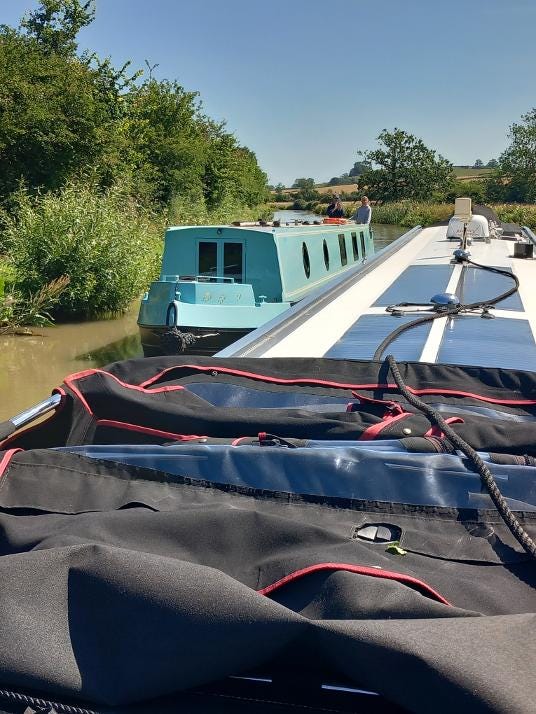
Heading back into the marina after a week’s cruising, I felt relaxed and clear headed. I often think I’ll run out of things to write about here, but a combination of life events and other people’s articles always sparks a few thoughts and ideas that begin to coalesce into some sort of coherent (hopefully!) narrative and lo and behold, I’m sitting at my laptop again.
The writers in my little corner of Substack inspire me every week and the writers and articles that have inspired me this week are Rachel Haack, LMFT ‘When Attachment and Differentiation Collide, The Midlife Nomad ‘The Bridge Years’ and Maraya Rae Rodostianos ‘Ego Is Not a Dirty Word’. I’m so grateful to all of these writers for generously sharing their wisdom, knowledge and expertise; I learn from them every week and rather than include lots of quotes from each of these articles, I recommend you look them up if you don’t already subscribe to these excellent writers.
I’ve written a lot about my experiences of moving from a house to a narrow boat and how living a more nomadic life, sometimes away from family and friends has impacted upon me and my emotional wellbeing. Moving from a 3 bedroom, 2 bathroom house to a narrow boat meant we had to give away 99% of our possessions; we don’t have anything in storage, should we decide to move back into a house or a flat, so we had to be absolutely brutal in downsizing what we owned.
Living in a house feels safe; we feel tethered to our homes, our routines, a sense of place, our neighbours, our roles in the community and letting go of all of those anchors can feel scary and unsafe.
The last 5 years have taught me how much emotional and psychological ‘stuff’ I also needed to dispense with; I liken my life’s journey (one day I’ll write an article without the ‘J’ word) to putting on a succession of cloaks from when I was very young. As children, we rely on our caregivers to ensure we survive and to keep us safe; because of our need for safety, we HAVE to adapt to our environment. Many people of my generation were raised by parents for whom ‘good’ behaviour was paramount; to differentiate from our parents, even as teenagers, could challenge our attachment or connection to them. As an eldest child, I was raised to be the sensible one, the responsible one, to set an example to my siblings, to be a ‘good’ girl; many men and women of my generation will recognise this pattern as we placed the cloaks of goodness, compliance and responsibility firmly around our shoulders.
I would imagine few parents of my parents generation were overly concerned about their own emotional maturity; that wouldn’t have been something they’d been taught, so it wasn’t a deliberate omission, it just wouldn’t have occurred to them to evaluate themselves in that way. As long as we (children) were well mannered, tried hard at school, behaved ourselves, did as we were told and were respectful of adults, all was well.
As we grew up, some of us placed extra cloaks around our shoulders to stay attached and to avoid disapproval; cloaks of performance, perfectionism and fawning. None of this was conscious, but scanning every environment we found ourselves in and adapting accordingly enabled us to feel comfortable, safe and to fit in. We unconsciously accepted the roles assigned to us and even though the cloaks we wore were heavy, we were attached and connected to everyone around us. We felt safe.
Feeling tethered to a role can feel good; before I moved onto the boat, I was a Pilates and yoga teacher and a huge part of my ‘self’ was validated by my career. Whenever I attended courses, I always seemed to find myself in a role of responsibility, as a leader or group spokesperson. This happened all the time and it's only recently that I've become aware that I took those roles on as a way of creating certainty in an uncertain situation. Taking charge made me feel safe and enabled me to control the environment to some degree. I appeared confident, mature and a natural teacher, but there were patterns still running from decades before that I wasn't aware of; patterns that were all about connection and protection.
I had no idea that I could be connected and attached to others in any situation, yet be myself. Who am I if I'm not pleasing everyone? What's my purpose if I'm not focused outwards? The concept of differentiation and attachment is something I'm only now beginning to understand; I've spent years accumulating more and more cloaks of protection, never realising that it's possible to loosen all those ties and let go of the weight I've unconsciously carried for far too long.
I love Najwa Zebian's book Welcome Home; Najwa writes about how we need to build our home's foundation within ourselves. When we first moved onto the boat, the feeling of being untethered genuinely terrified me because I'd never built foundations of safety in my own body. I'd been very attached to the validation that my career had given me and tried to connect to others by fawning. No one asked anything of me, but these were roles I'd assumed long ago and never questioned.
At the grand age of 68, I've learned I can loosen all the ties that have held my perception of who I am in place for so long and remove the cloaks of responsibility and ‘goodness’ that I've carried. I can be myself and be connected; if a relationship is ruptured for any reason, I can help to repair it without being rejected. I no longer need or want to be a teacher or a leader and prefer to be ‘one of the gang’, to contribute if I feel I have something valid to say and to stay quiet and learn from others when I don’t.
I love the feeling of being untethered now as it feels more like freedom and potential than insecurity; being more tethered to myself allows me to feel and be at home anywhere, whether I'm moving or static. Rather than feeling I need to belong to any particular group, I need to belong to myself first and foremost. I know connection and attachment isn't geographical, but comes from my heart. I don’t have to be constantly wondering how to please everyone to be loved.
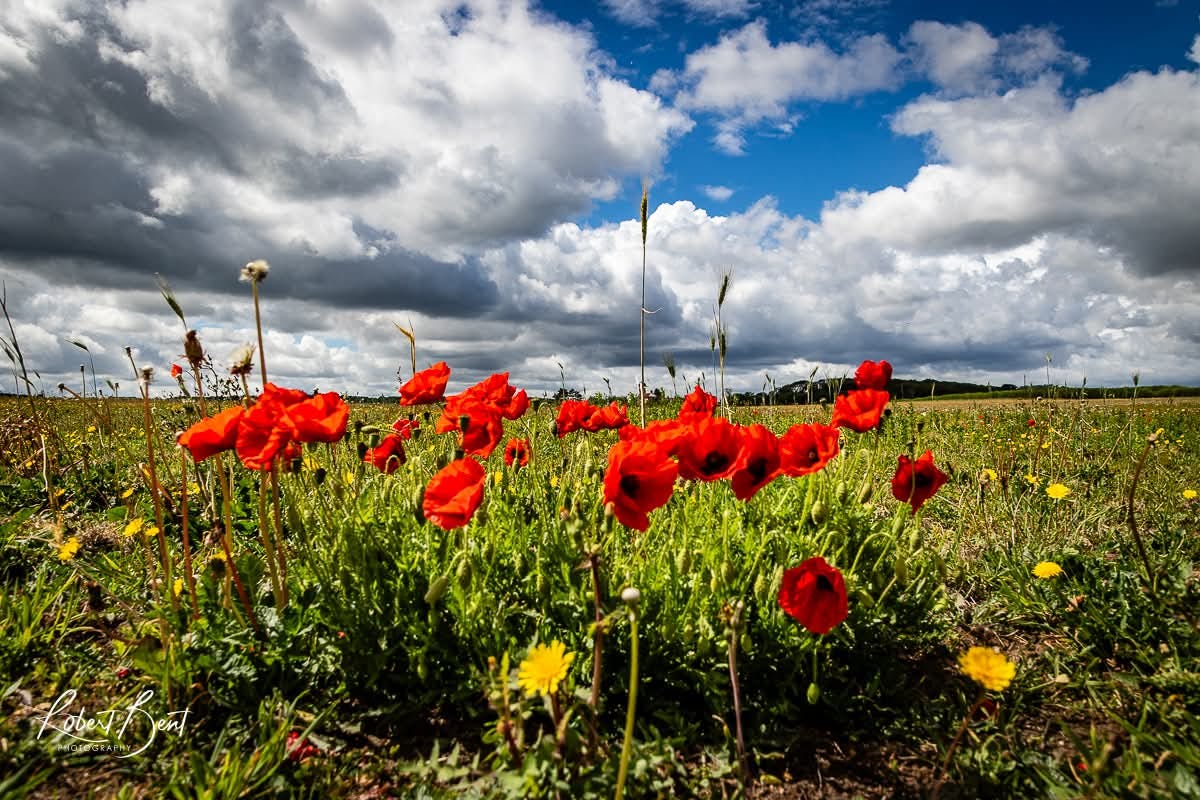
When we’re young, I think we sometimes believe there’ll be a point when we know all there is to know, that with hard work we can have it all, but my personal experience is showing me that we need to hold on lightly to the ties that bind us. My eldest grandsons are now becoming parents, so they’ll necessarily be tied to parenthood for the forseeable future. Yet there will be a time when their boys will want to loosen their attachment to their parents to find out who they are and they’ll need to loosen those ties in years to come. We need to remain constantly flexible, to reassess what is serving us and what we need to let go of at every stage of our lives.
Letting go of most of what we owned didn’t feel difficult because we were choosing a different way to live; having few possessions feels lighter, yet we still have everything we need. Attachment and differentiation are at the forefront of my mind nowadays; differentiation in terms of ‘am I being true to myself?’ and attachment in terms of ‘am I able to be attached or connected to this person/these people without losing connection with myself?’ The ties are loosening and the cloaks are being gently set down, yet I’m grateful for the protection they’ve given me and I’m curious about where this life is taking me as the load lightens in my soul.
We visited our eldest daughter at the weekend and she called upstairs to tell our teenage granddaughter V to come downstairs as ‘grandma and grandpa are here’. V replied that she was tidying her bedroom and didn’t come down until we were leaving. It was only afterwards that I thought that would never have happened when I was young! When V did come downstairs, she was smiley and sunny and just herself; a teenager finding out who she is and learning to be herself. I love the fact that she has the freedom to express herself, that she isn’t being buried under the weight of assigned roles or responsibility and that she isn’t having to be a ‘good’ girl. More than anything, I love that she can be herself i.e. a stroppy teenager, yet know she is loved.
With love,
Karen x
Karen, this is inspiring. I lost my home ten years ago and I loved the project of focusing in on the absolute essentials so that I could basically live in my car. It wasn't comfortable- I'm too tall to lie down in a car. But I still remember the mornings in some random place, making a cup of tea with my tiny stove. My friends and family were far more concerned about it than I was!
Your final thought about your granddaughter really made me stop and think.... I am 64 and my upbringing and the expectations put upon me as the oldest of 4 children were very similar to those you describe. My own granddaughters are 16 and 14 and were delighted to see us when they were little... Nowadays, conversations aren't always easy with them and they clearly think we're just old fogeys who know very little, but they're polite and friendly and helpful at home so I've tried to accept that things have changed.
Thanks for putting some context around it all.... ☺️